Book review: Mythago Wood by Robert Holdstock
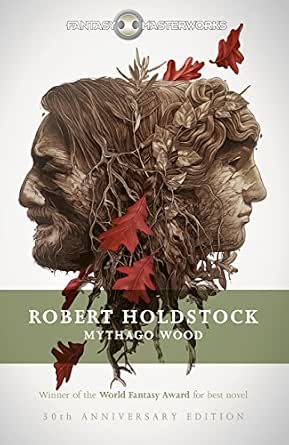
Have you ever walked, alone, in an English wood at twilight? That’s the genius of the book’s central idea because anyone walking in one of England’s old woods when the day is done but night not yet come will have felt the shadow of the years and the whisper of tales following them in the hush when the birds settle and the wood…waits. That’s the quiet before the story starts, the pause before the first breath, the stop before the fall.
As such, for any who have walked in such woods, it must come as something almost obvious that these woods contain things unseen, that they stretch away to places unwalked, and that they hold mysteries. That’s the central idea of Mythago Wood: that myths come from the wood, made real, flesh and blood but still myth, and that the wood itself is, like the Tardis, bigger on the inside than the outside.
What the book of the wood does, and does really well, is convey this idea of ‘wood’ as birthing pool and whirlpool, as a place of danger and refuge, of enchantment and chains. What it doesn’t do particularly well is tell a story or portray characters. Of the characters in the book, only Stephen, the protagonist, and his brother and antagonist emerge as real characters; Guiwinneth, their joint love interest, bears all the irritating mark of a female character whom the (male) author has fallen in love with himself.
As for the story, it shares the disjointedness of dream, which is appropriate given the subject matter, but disappointing, given the necessities of narrative. Myths may spring from the unconscious woodland but they are formed and given shape in the light. Here, we get the myth too raw for true art but raw enough to let one slip, for a moment perhaps, when putting the book down at the end of the day, into the hinterland of that Great Wood of story that lies on the edge of our world and others.
0 Comments