Book review: The World of Late Antiquity by Peter Brown
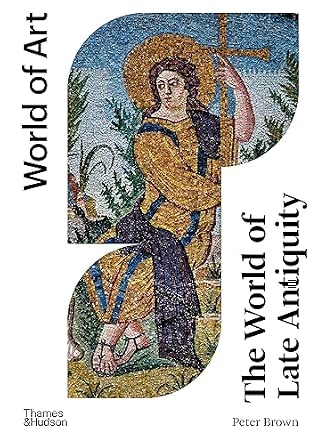
It’s a rare book that transforms a field of study. This is one of those rare books. For two hundred years, the study of the fourth to the eighth centuries had lived in the long, long shadow of Edward Gibbon’s The Decline and Fall of the Roman Empire. Gibbon was both a great writer and a great historian; according to his work, the ruins of Empire that the aristocrats who went round Europe on the Grand Tour saw in Rome and other stops along the way told the story of a lost civilisation that had fallen when the barbarians took over, bringing in a new age of darkness that endured until, well, Gibbon himself.
It took Peter Brown to point out the problem with this: the Empire didn’t fall. Yes, in the West, Rome itself was captured by barbarians but for more than a century before that, Rome hadn’t been the capital of the Empire: that was Constantinople. And Constantinople didn’t fall. Its emperors regarded themselves as the rulers of the Roman Empire and the citizens of his Empire saw themselves as Romans. Meanwhile, in the West, the new barbarian kings were rapidly adopting all they could of the old Empire.
Brown’s genius was to look at the changes that occurred between the fourth and eighth centuries as change and transformation rather than decline and fall. As such, he unlocked a completely new vision of this period of history. While the decline and fall narrative still holds some explanatory value (particularly in Britain), the change and transformation makes much more sense in the eastern Mediterranean as well as helping us understand exactly what these incoming barbarians wanted when they arrived.
It also helps that Peter Brown is as accomplished a writer as Edward Gibbon – and that’s high praise indeed!
0 Comments